
Neuromodulation
Non-invasive treatments to influence brain activity
Cerebral neuromodulation makes it possible to target specific brain circuits using non-invasive techniques. At CITA Clinics, we employ two of these: Transcranial Magnetic Stimulation (TMS) and Transcranial Direct Current Stimulation (tDCS).
Although they are distinct procedures, they share a common goal: to modulate the activity of specific brain areas and foster processes linked to neuroplasticity—the brain’s ability to alter its functioning and reorganize its connections.
At CITA, we utilize neuromodulation as part of an individualized medical approach; we do not apply a standard protocol to every patient. Before treatment begins, a specialized assessment is conducted to evaluate the diagnosis, predominant symptoms, medical history, current medication, previous treatments, and potential contraindications.
Furthermore, our specialized expertise in addiction and mental health allows us to integrate these techniques into broader treatment plans addressing issues such as cravings, impulse control, specific depressive or anxiety symptoms, and other disorders involving altered brain circuits related to emotional and behavioral regulation.
What is neuromodulation?
Our brain does not function as a static structure. Neural networks change based on experience, learning, habits, and certain medical conditions.
This capacity for adaptation is known as neuroplasticity.
Neuromodulation encompasses various techniques aimed at modifying the activity of the nervous system. Non-invasive neuromodulation refers to procedures that act from the outside—without surgery and without the need to implant devices.
TMS and tDCS are two non-invasive brain neuromodulation techniques that have seen significant clinical development and research in fields such as psychiatry, neurology, rehabilitation, pain management, and mental health.
However, they are not the same treatment.
TMS: Transcranial Magnetic Stimulation
What is TMS?
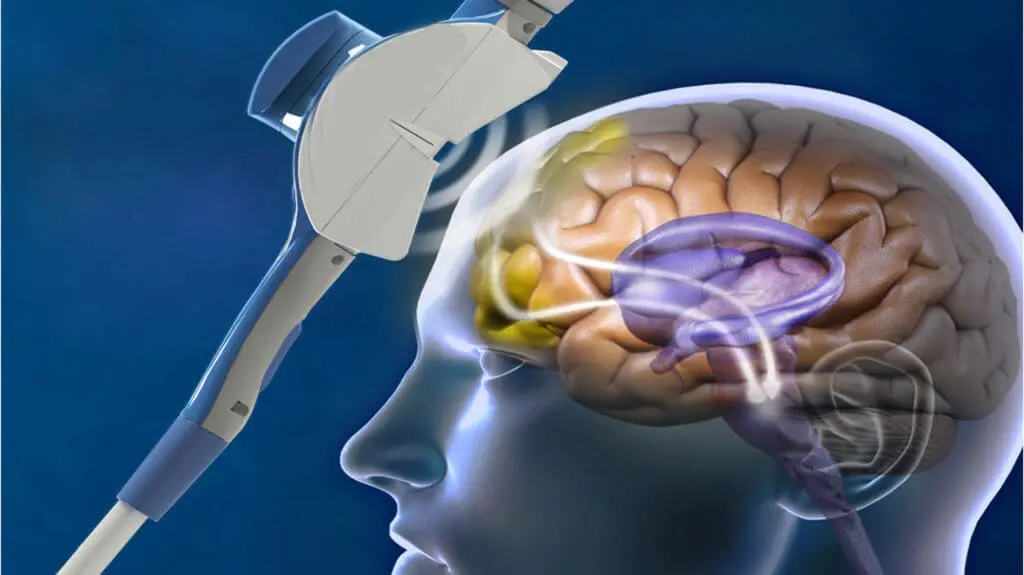
Transcranial Magnetic Stimulation (TMS) uses magnetic fields to stimulate specific areas of the brain.
During the session, a coil is placed against the scalp. The coil generates magnetic pulses that induce an electrical current in brain tissue, allowing for the localized modification of neuronal activity.
When this stimulation is administered repeatedly, it is known as rTMS (repetitive Transcranial Magnetic Stimulation).
The goal of the treatment is not merely to produce isolated stimulation. Through repeated sessions, the aim is to induce changes in the functioning of specific brain networks and promote neuroplasticity processes.
How does TMS affect the brain?
Brain activity relies on electrical and chemical communication between neurons.
With TMS, we can direct magnetic pulses to a specific brain region and modify its activity in a controlled manner.
The effect depends on several factors: the area stimulated, pulse frequency, intensity, the number of stimuli, and the protocol used.
Our equipment allows for various stimulation modalities, including rTMS and theta burst stimulation (TBS).
That is why a preliminary assessment is crucial; two patients with seemingly similar symptoms may require different protocols.
What is a TMS session like?
The patient remains seated and awake.
The practitioner places the coil over the selected area and begins stimulation. During the procedure, a repetitive sound is heard, and a sensation of light tapping on the scalp may be felt.
Before starting certain treatment protocols, the so-called motor threshold may be calculated; this allows for the determination of a stimulation intensity tailored to each patient.
It requires neither anesthesia nor sedation.
Once the session is over, the patient can usually resume their normal activities.
What is TMS used for?
Transcranial Magnetic Stimulation has been studied for years across various fields of neurology and psychiatry.
Applications listed in the equipment documentation include:
- major depressive disorder;
- obsessive-compulsive disorder;
- neuropathic pain;
- Parkinson’s disease;
- stroke;
- certain diagnostic applications involving the nervous system.
Research is also being conducted in other areas, such as chronic pain, neurological rehabilitation, post-traumatic stress, and addiction-related disorders.
The existence of scientific research regarding a condition does not mean the technique is automatically indicated for all patients; each case must be evaluated individually.
Neuromodulation and Addictions
Targeting circuits associated with craving
At CITA, the application of neuromodulation is of particular interest given our specialization in addiction and dual diagnosis.
Addiction cannot be explained solely as a problem of willpower or behavior. It involves brain circuits linked to processes such as reward, motivation, impulse control, and decision-making.
One of the most difficult symptoms to manage is craving—that intense urge to consume a substance that can arise even after a period of abstinence and is a key factor in the risk of relapse.
TMS is currently being investigated precisely for its ability to modulate the brain regions involved in these mechanisms.
Recent scientific literature continues to view this as a promising, albeit still evolving, field. A meta-analysis published in 2025 found a significant reduction in craving across the studies analyzed using deep magnetic stimulation; however, it also noted high heterogeneity among studies and the need for more rigorous research before definitive recommendations can be established.
This aligns with earlier research on stimulating the dorsolateral prefrontal cortex in individuals with addictions, which observed interesting results regarding craving, despite significant methodological limitations.
For this reason, at CITA, we view TMS as a potential tool within a comprehensive addiction treatment plan, rather than as a standalone therapy that replaces psychological, psychiatric, and behavioral interventions.
Neuromodulation, Anxiety, and Emotional Regulation
Anxiety is linked to complex brain networks involved in emotional regulation, threat perception, and the control of cognitive and physiological responses.
Both TMS and tDCS are being investigated for various anxiety-related disorders and symptoms.
The evidence varies across disorders and protocols; therefore, it would be incorrect to speak of a universal technique to “cure anxiety.”
Nevertheless, it is an area of particular interest within the field of neuromodulation.
Regarding tDCS, a recent systematic review specifically analyzed its use for anxiety symptoms and other related markers.
There is also particularly interesting research concerning the co-occurrence of anxiety, depression, and addiction. A review published in 2025 on tDCS for substance use disorders found favorable results regarding anxiety and depression symptoms, although the authors themselves note that further studies are needed to confirm and clarify these effects.
This point is especially relevant for a clinic like CITA, where it is common to approach the patient from a dual diagnosis perspective rather than limiting treatment solely to addictive behavior.
Residential treatment and neuromodulation
The importance of working on the brain while developing new habits
One of CITA’s distinguishing features is the ability to integrate neuromodulation into the treatment of patients enrolled in our residential program.
This creates a clinically fascinating combination.
Neuromodulation techniques aim to foster changes in brain activity and neuroplasticity processes.
However, the brain does not change in a vacuum.
During their stay, the patient is simultaneously undergoing an intense process of learning and behavioral change.
They begin establishing schedules, normalizing sleep patterns, resuming physical activity, working on emotional regulation, identifying high-risk situations, controlling impulses, and acquiring new strategies to cope with distress.
They also participate in psychotherapy, group therapy, and activities designed to modify many of the patterns associated with their addiction.
Therefore, neuromodulation can be administered while the patient practices these new behaviors on a daily basis.
This does not mean that TMS or tDCS “teach” good habits on their own. It means something different: we can apply neuromodulation at a time when the brain is simultaneously undergoing an intensive therapeutic process of learning, repetition, and change.
This context is difficult to replicate when a neuromodulation technique is administered in complete isolation.
Neuromodulation + residential treatment
We work on neuroplasticity while the patient builds new routines, new responses, and new ways of relating to substance use.

A particularly interesting approach to addiction
In residential addiction treatment, the individual does not simply receive TMS or tDCS sessions.
Neuromodulation can be integrated with:
psychiatry, psychology, sociotherapy, therapeutic groups, craving management, physical activity, sleep regulation, relapse prevention, family work, and progressive preparation for returning to daily life.
This allows for simultaneously addressing different dimensions of the problem.
Because while reducing cravings is important, recovery also requires learning what to do when the urge returns, how to recognize high-risk situations, and how to build a routine in which substance use no longer takes center stage in one’s life.
Advantages of TMS
Transcranial Magnetic Stimulation offers several features that explain the growing clinical interest in this technique.
It is non-invasive and requires no surgery.
The patient remains awake.
No anesthesia is required.
It allows for targeting specific brain regions.
Parameters can be adjusted to suit the therapeutic goal.
Various stimulation modalities are available.
It can be integrated into broader psychiatric, psychological, or rehabilitation treatment plans.
The system used at CITA also features session logging, configurable protocols, and tools for monitoring treatment progress.
Does TMS have side effects?
TMS is generally well-tolerated, but it is not without potential adverse effects.
The most common side effects include scalp discomfort, headache, a tingling sensation, minor facial muscle contractions, or a temporary feeling of dizziness.
These effects are typically mild to moderate and tend to diminish as treatment progresses.
There are also certain contraindications related to—among other factors—implanted electronic devices, specific metal materials, and certain neurological conditions.
For this reason, a preliminary medical assessment is part of the treatment process.
tDCS: Transcranial Direct Current Stimulation
What is tDCS?
Transcranial Direct Current Stimulation, known as tDCS, is a technique distinct from TMS.
Instead of using magnetic fields, it delivers a low-intensity continuous electric current via electrodes placed on the scalp.
The goal is to modify the excitability of specific brain regions and promote neuroplasticity processes.
It is a non-invasive technique.
How does tDCS work?
Electrode placement is not random.
Their position depends on the brain areas targeted for modulation and the protocol used.
Other influencing factors include:
polarity, intensity, session duration, the number of sessions, and the frequency of administration.
During stimulation, changes occur in the neuronal membrane potential. Repeated sessions aim to produce a neuromodulatory effect and promote brain plasticity in the selected areas.
What is a tDCS session like?
Several electrodes are placed on the scalp according to the established protocol.
To ensure accurate placement, caps based on the international 10-20 system—used as a reference to locate specific brain areas—may be used.
The patient remains awake during the procedure.
A slight tingling, warming, or itching sensation may be felt beneath the electrodes, especially at the beginning.
What is tDCS used for?
Research into tDCS spans various fields, including psychiatry, neurology, rehabilitation, and pain management.
The device’s technical documentation outlines applications related to:
- neuropathic pain;
- chronic pain;
- fibromyalgia;
- stroke;
- major depressive disorder;
- certain symptoms associated with schizophrenia.
Furthermore, research is ongoing regarding its potential utility for symptoms of anxiety, depression, and various neuropsychiatric disorders.
There is also growing interest in studying its effects on cravings, cognitive control, and associated emotional symptoms in the context of addiction. While the evidence is promising in some areas, it does not support the indiscriminate use of a single protocol for every patient.
Avantages de la tDCS
La tDCS est une technique
Non invasif.
La stimulation est réalisée de l'extérieur.
Compatible avec d'autres traitements.
Peut être intégré à des programmes de psychothérapie, de réadaptation, de traitement psychiatrique ou de traitement des dépendances.
Bien toléré.
Fonctionne avec des courants de faible intensité.
Convient aux protocoles multisessions.
La répétition est importante pour favoriser les processus de neuroplasticité.
Personnalisable.
Le placement des électrodes et les paramètres de traitement dépendent de l'objectif thérapeutique.
Home-based tDCS
In certain cases, and provided a professional deems it appropriate, home-based tDCS protocols may be established.
The device used allows for the pre-configuration of:
the number of sessions, application schedules, treatment parameters, and maintenance guidelines.
The system also allows for the retrieval of data on completed sessions to facilitate professional monitoring.
The securing mechanisms are designed to make it difficult for the patient to alter the position or polarity of the electrodes once the protocol has been established.
The option for home use does not make tDCS a treatment to be used without supervision. Professional assessment, prescription, and a protocol are required.
TMS vs. tDCS: What is the difference?
Both are non-invasive brain neuromodulation techniques, but they work differently.
TMS | tDCS |
Uses magnetic fields | Uses low-intensity electric current |
Administered via a coil | Administered via electrodes |
Allows stimulation to be directed at specific areas | Modulates excitability through different electrode montages |
Usually performed in a clinical setting | Some protocols can also be performed at home |
Can utilize rTMS, TBS, and other protocols | Allows for modification of intensity, polarity, position, and duration |
The right question is not so much “Which is better?”, but rather “Which …makes more sense for this patient and for this therapeutic goal?”
Can TMS and tDCS be combined with psychotherapy?
Yes, when medically indicated.
In fact, at CITA, we consider it particularly valuable for neuromodulation to be part of a broader treatment plan.
Brain stimulation addresses one dimension of the problem, while psychotherapy, behavioral work, and the patient’s daily experiences address others.
This is particularly important in the context of addiction.
It is not enough to simply address cravings; it is also necessary to work on what triggers them, how the patient responds to them, what alternatives are available, and how the patient will manage upon returning to their usual environment.
Our Neuromodulation Program at CITA Clinics
Every treatment begins with a specialized medical assessment.
During this process, we evaluate:
the reason for the consultation, the diagnosis, predominant symptoms, medical and psychiatric history, previous treatments, current medication, and potential contraindications.
Based on this information, we determine:
whether neuromodulation is indicated, which technique and protocol to use, the frequency of sessions, and how to integrate the procedure into the overall treatment plan.
For patients dealing with addiction, anxiety, depression, or dual diagnosis, this approach is particularly important, as there is rarely a single symptom that explains the entire clinical picture.
Request a specialized assessment
Not all patients require neuromodulation, and not everyone needs the same protocol.
The initial decision must always be clinical.
If you would like to know whether TMS or tDCS treatment might be indicated for your case, our team can conduct an assessment and explore the various therapeutic options.
Frequently Asked Questions About TMS, tDCS, and Neuromodulation
What is cerebral neuromodulation?
Cerebral neuromodulation encompasses techniques aimed at modifying the activity of specific brain networks. TMS and tDCS are two forms of non-invasive neuromodulation: one uses magnetic fields, while the other employs low-intensity electric current.
What is Transcranial Magnetic Stimulation used for?
TMS is used and studied in the context of various neurological and psychiatric disorders. Existing applications include major depression, OCD, neuropathic pain, and certain neurological conditions. There is also growing research into addictions and other mental health disorders.
Can TMS help with addiction?
The capacity of certain TMS modalities to modulate brain circuits associated with craving, reward, and impulse control is currently being studied. Recent research shows promising results, yet there is still no single recommendation applicable to all addictions and patients.
At CITA, when indicated, it is used as part of a broader therapeutic program.
Is neuromodulation effective for anxiety?
TMS and tDCS are being investigated for various symptoms and disorders related to anxiety. Results vary depending on the diagnosis and the protocol. Regarding tDCS, recent reviews show promising results, but further research is still needed before conclusions can be generalized.
What is a craving?
Craving is an intense desire to consume a substance or repeat an addictive behavior. It can appear even after stopping consumption and is one of the important elements worked on during addiction recovery.
Neuromodulation is being studied precisely on some of the brain circuits related to this phenomenon.
Does a TMS session hurt?
Generally, no. You may feel a tapping sensation on the scalp, and some people experience localized discomfort or a temporary headache.
It does not require anesthesia, and the patient remains awake during the session.
What is tDCS?
tDCS is a neuromodulation technique that uses a very low-intensity electric current, applied via electrodes on the scalp, to modify the excitability of specific brain areas.
How many TMS or tDCS sessions are needed?
It depends on the diagnosis, the protocol used, and the patient’s progress. Neuromodulation is typically administered over several sessions, as repeated stimulation is part of the process intended to induce changes in brain activity.
What is the advantage of undergoing neuromodulation during a hospital stay?
During residential treatment, the patient works daily on new habits and responses: sleep, physical activity, psychotherapy, impulse control, emotional regulation, and relapse prevention.
Administering neuromodulation during this period allows it to be integrated into a time of particularly intensive therapeutic learning, rather than being delivered as an isolated intervention.
Can I take medication while undergoing TMS or tDCS?
In many cases, neuromodulation can be combined with pharmacological treatment. However, medication must be reviewed before starting the protocol, as it can influence the indication, safety, or response to treatment.